
Zone 6 is a journey through time, nature, and space. Visitors can step back through centuries past and are propelled into spaceto see where Skills and the Industrial Revolution will take us in the future. One of the more surprising discoveries is seeing just how many innovations are inspired by our natural environment.
Take the flick of a chameleon’s tongue as it captures its prey. This single movement is understood to have the highest acceleration and power output of all reptiles, mammals, and birds. It is the inspiration behind a bionic robot developed by Festo, a German automation company and WorldSkills Global Industry Partner. Bionics refers to the fusion of biological, physical, and natural systems, and it is a field that is powering the fourth stage of the Industrial Revolution. Festo believes learning from nature and applying its principles to build smart technologies is increasingly vital for resource management and shaping a greener world.
The engineers at Festo started by observing the behaviour of chameleons in their natural habitat. Using these learnings, they developed the bionic technology to create the FlexShapeGripper®, a gripping machine capable of picking up fruits and vegetables. The gripper features soft, flexible fingers that can adapt to the shape of objects without requiring precise positioning or adjustments. Their learnings encouraged Festo to go on and expand its portfolio with other bionic technologies and products, inspired by the movements of animals including, elephants, flying foxes, and bony fish.
On display is also Festo’s Fin Ray Effect® technology, developed by observing how fish move underwater. Fish fins are composed of multiple interconnected rays that are flexible yet robust, allowing for precise control of movement and efficient propulsion. Festo’s engineers translated this biological principle into engineering applications by designing artificial fins made of flexible materials with a series of interconnected segments. Like fish fins, systems that use the Fin Ray Effect® are flexible and adaptable, allowing for dynamic movement and manipulation of objects. They are also resilient and capable of withstanding repeated use and mechanical stress.
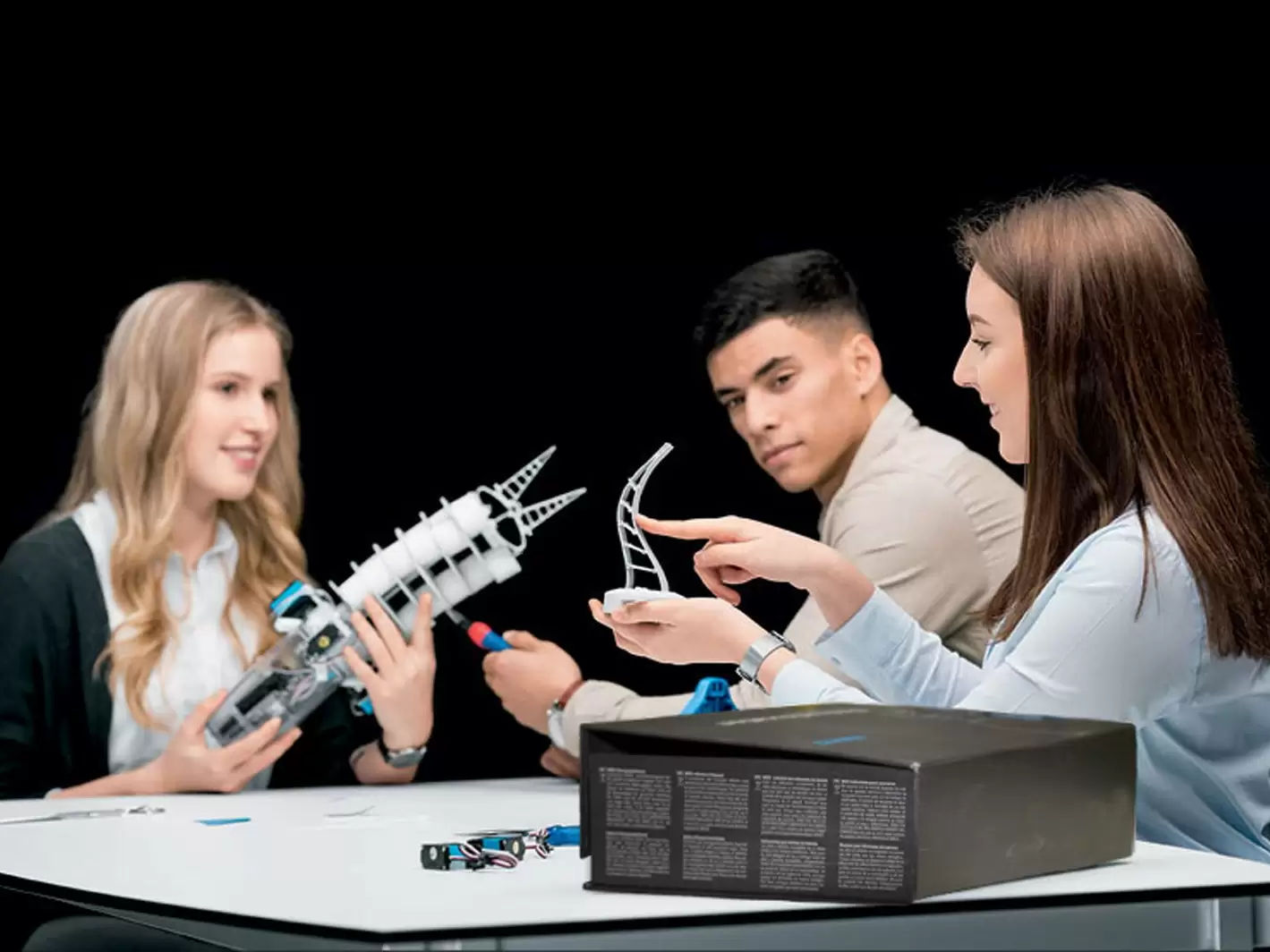
As well as improving our industrial processes, Festo is committed to nurturing skills in young people. Beyond the Museum, Festo has developed Bionics4Education – a Bionics Kit and digital platform that allows students to build their own bionic animal prototypes. The Bionics Kit contains the materials to build three different projects: a bionic chameleon gripper, a bionic fish, and a bionic elephant’s trunk with an adaptive gripper. The complementary digital learning platform has educational resources and interactive features that provide essential context, including the biological background of each technology. It helps students understand the real-world applications of bionic principles and their relevance to society and industry.
Fields like bionics reinforce the incredible potential of skills in creating a better, more sustainable future. Festo and WorldSkills hope that, by building an early understanding of the natural world, young people can use their skills to discover technical developments that will improve our industries, protect our planet, and reshape our world for the next industrial revolution.